
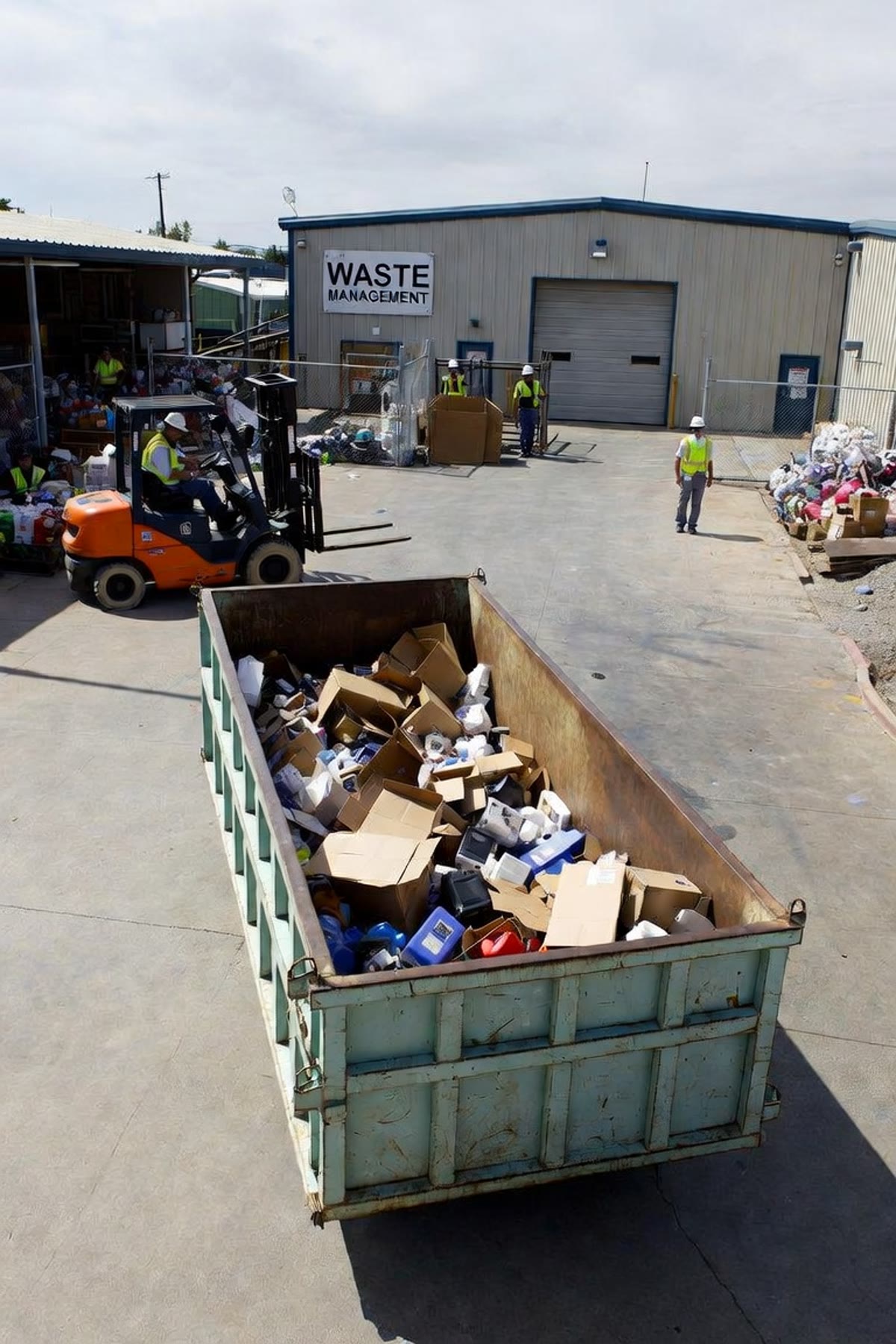
Most rejected loads aren't the result of bad intent — they're the result of a five-minute conversation that should have happened the day before, not at the scale with a full truck and a line forming behind it. Here's what consistently causes delays at the gate, and what prevents it.
1. Call ahead for anything outside standard categories
Household garbage, construction and demolition debris, wood and paper, shingles, scrap iron, tires, and appliances are all straightforward, posted-rate categories. Almost everything else — drill cuttings, contaminated soil, asbestos, industrial process waste, anything you're not 100% sure how to describe in one sentence — should be a phone call before it's a truckload. The gate office can confirm in advance whether the site is currently authorized to accept the material, what documentation needs to travel with it, and whether it needs to be scheduled rather than just driven in during regular hours.
2. Don't mix waste categories in one load
A load that combines clean construction debris with even a small quantity of asbestos siding, contaminated soil, or hazardous material doesn't get billed or processed as the lower-risk category — it gets handled according to whatever the most restrictive material in the load requires. Pre-sorting at the job site, before anything goes into the truck, is almost always faster and cheaper than trying to separate material at the scale or, worse, having the whole load turned around.
3. Have your paperwork ready before you reach the scale
For hazardous waste specifically, this means the manifest is filled out, signed where it needs to be, and physically present with the load — not back at the office. For industrial waste characterization, it means having documentation on hand that describes what the material actually is, particularly for anything that isn't visually self-evident. A driver who can answer "what is this and where did it come from" in one sentence moves through the gate considerably faster than one who can't.
If you can't describe the material in a single clear sentence — what it is, where it came from, and roughly how much there is — you're not ready to bring it to the gate yet. Get that sentence sorted out first, even if it just means one phone call to whoever generated the waste.
4. Secure the load properly, every time
This sounds basic, and it is — but loose or uncovered material is one of the most common and most preventable issues haulers run into, both on the road and at the site. Manitoba landfill rules are explicit on this point: refuse being transported has to be conveyed in a manner that prevents littering, and offenders face charges, not just a warning. Beyond the legal exposure, a load that's scattered debris across the gravel access road on the way in creates real cleanup work and slows down every vehicle behind it.
5. Know your weight before you arrive, roughly
Every vehicle gets weighed in and weighed out, and the net difference is what gets billed at the posted rate. You don't need scale-perfect precision ahead of time, but having a reasonable estimate helps avoid surprises at settlement — particularly for loads close to a pricing threshold, like appliances, which are billed per unit rather than by weight and need to be identified as such rather than buried inside a mixed load.
6. Respect the posted hours, and plan around holidays
The Virden site operates Tuesday through Saturday, 10:00 AM to 6:00 PM, and is closed on most statutory holidays. This isn't a soft suggestion — showing up outside operating hours with a loaded truck just means the trip has to happen again. If a holiday is coming up and the timing of your project depends on disposal access, a quick check of the schedule (or a call to the gate office) avoids a wasted trip entirely.
7. If in doubt, ask — don't guess
The single most common thread running through almost every delay we see at the gate is a hauler who assumed rather than confirmed. Assumed the material was fine to bring without checking. Assumed mixed loads would be sorted out on-site. Assumed the site was open on a holiday Monday. None of these assumptions are unreasonable on their face — they're just wrong often enough that a thirty-second phone call beats them every time.
None of this is complicated, and none of it is designed to make hauling harder than it needs to be. It's designed to make sure the load that shows up at the scale is the load the site can actually process — the first time, without a return trip.