
Western Manitoba sits close enough to the Saskatchewan border that questions about hauling waste across provincial lines come up regularly. The short answer is that it's allowed and it happens routinely — but it's governed by rules that exist at both the provincial and federal level, and skipping either one creates a real problem.
Receiving out-of-province waste changes a landfill's classification
It's worth starting with a fact that shapes everything else: under Manitoba's Waste Management Facilities Regulation, a landfill that receives solid waste from outside the province is, by definition, a Class 1 Waste Disposal Ground — regardless of its tonnage. This is one of three independent triggers for Class 1 status, alongside tonnage thresholds and third-party commercial operation. A site doesn't need to be large to take on this designation; it just needs to accept material that originated somewhere else.
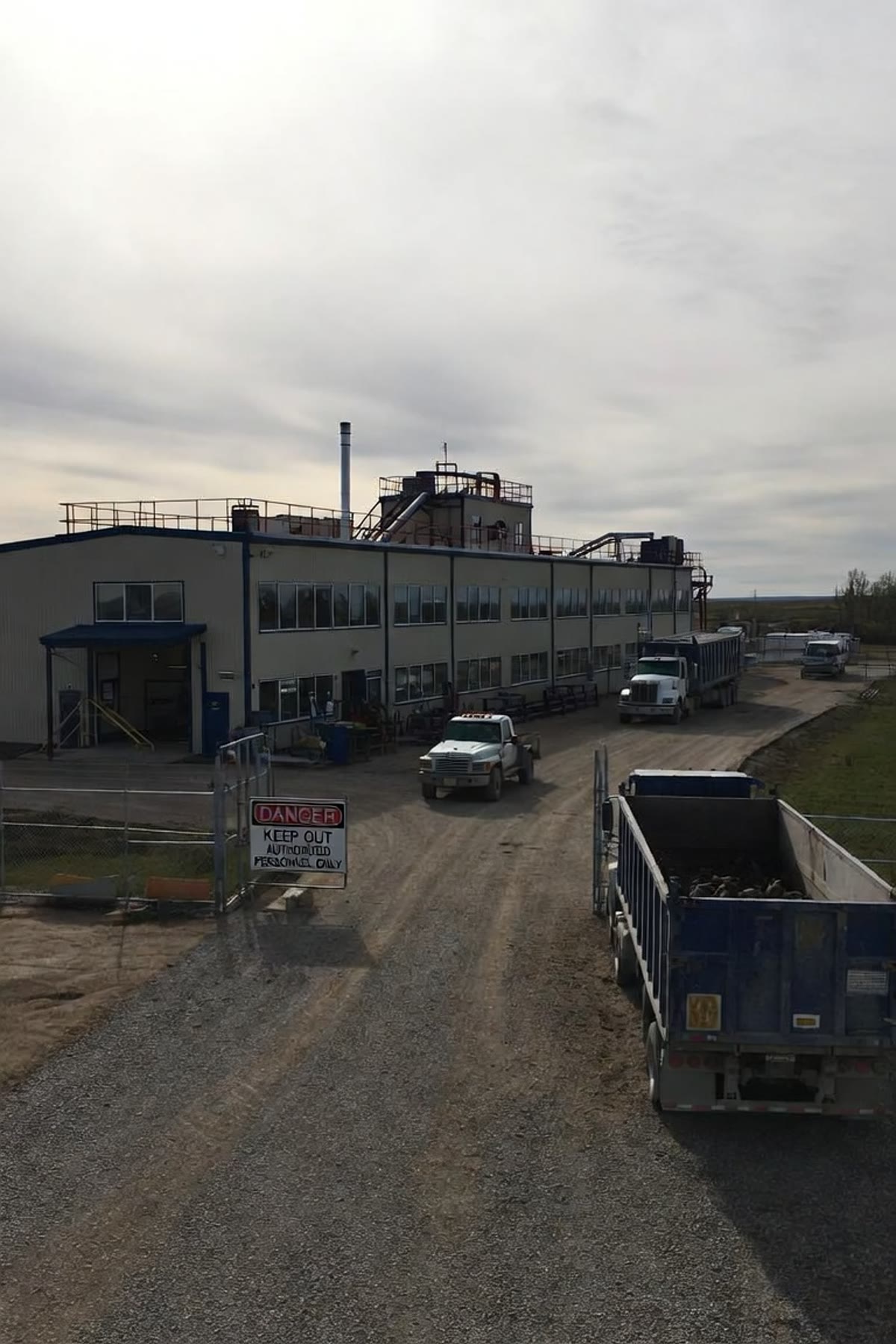
That single fact explains a lot about how a Class 1 site like Virden is built and run. The Environment Act Licence that allows the facility to operate already anticipates that waste may arrive from beyond Manitoba's borders, and the engineering, monitoring, and reporting obligations attached to that licence are calibrated accordingly.
Non-hazardous waste: simpler, but not unregulated
For ordinary construction and demolition debris, non-hazardous industrial waste, or similar material moving across a provincial line, the regulatory burden is lighter than it is for hazardous waste, but it isn't zero. The receiving facility still needs to be authorized to accept that specific waste stream under its own provincial approval, and the load still needs to comply with general transportation and load-securement requirements. The practical step that matters most for an out-of-province generator is simple: confirm with the receiving site, before the truck leaves, that the material is within their permitted waste acceptance criteria.
Hazardous waste: a different system entirely
The moment hazardous waste crosses a provincial boundary, the relevant framework shifts from purely provincial rules to a federal one. Tracking interprovincial movements of hazardous waste and hazardous recyclable material in Canada runs through the Interprovincial Movement of Hazardous Waste Regulations, with documentation handled through the Canadian Notification and Movement Tracking System (CNMTS) — an electronic system that has, in past federal reporting, processed on the order of 7,000 movement documents annually across the country.
A few specific points matter here for anyone generating hazardous waste outside Manitoba and sending it to a Manitoba facility:
- Manitoba doesn't issue generator numbers to out-of-province operations. Instead, Manitoba accepts a valid generator number issued by the appropriate authority in the province where the waste originated. The shipment is tracked under that originating jurisdiction's number, not a Manitoba-specific one.
- The movement document has to go through CNMTS, not a paper manifest alone, unless a specific provincial exemption applies. Carbon copies, faxes, and emailed documents are explicitly not accepted as a substitute.
- The carrier needs proper authorization for the jurisdiction the waste is moving through, with appropriate insurance and dangerous goods training, and the load needs to display the correct safety marks under the Transportation of Dangerous Goods Regulations.
- The receiving facility has to be an authorized consignee — meaning it's licensed by the relevant authority to receive that specific category of hazardous waste at the site in question.
When the federal government expanded the scope of regulated interprovincial hazardous waste movements, its own analysis estimated roughly a 10% premium on typical shipping costs for the newly affected shipments, driven by additional carrier training, insurance, and compliance obligations. If you're budgeting a project that involves moving hazardous waste across a provincial line, build that premium into the estimate rather than discovering it after the load is already arranged.
What this looks like from the Virden gate office
In practice, an out-of-province generator looking to bring waste to the Virden site should expect a short conversation before anything moves:
- What's the waste stream, specifically — and is it hazardous or non-hazardous under the applicable definitions?
- Is the material within the categories Virden is currently approved to accept?
- For hazardous material: is there a valid generator number from the originating jurisdiction, and has a CNMTS movement document been created?
- Is the carrier licensed for the move, with the right safety marks and shipping documents in the cab?
None of these questions are designed to slow a legitimate shipment down for its own sake. They exist because the answers determine whether the load is something the site can legally accept — and getting that confirmation before the truck is loaded is always faster than working it out at the scale.
Crossing a provincial line doesn't make a shipment more difficult so much as it makes the paperwork trail longer. Generators who plan for that trail in advance rarely have trouble. Generators who treat it as an afterthought tend to find out about it at the worst possible moment — at the gate, with a full truck.